Aluminum Roof Coating Built for How Aluminum Actually Moves
Aluminum expands nearly twice as much as steel, oxidizes the moment you clean it, and eats itself alive wherever a steel fastener touches it. OR-80SLM Silver Lining Membrane — pure polyurea, Miami-Dade approved — is sprayed over 7001 Primer as one seamless, 300%-elongation membrane that moves with the panel instead of cracking off it.
Request Contractor Pricing & SpecsWhy Aluminum Needs Its Own Coating Spec
It Moves Twice as Much as Steel
Aluminum's coefficient of thermal expansion is roughly 13 × 10⁻⁶ per °F — about double carbon steel. A 100-foot panel run can travel close to an inch across a summer-to-winter swing. A rigid film cracks at the ribs and end laps. OR-80SLM elongates 300–400% and simply stretches with it.
Galvanic Corrosion Starts at the Fastener
Aluminum is anodic to steel and stainless. Every carbon-steel screw, every steel curb, every galvanized flashing detail sets up a cell that dissolves the aluminum first. A seamless polyurea membrane over 7001 Primer electrically isolates the dissimilar metals and cuts the electrolyte off entirely.
The Oxide Layer Is the Adhesion Problem
Aluminum grows a fresh oxide skin within minutes of abrasion. That is why coatings that stick fine to blasted steel peel off aluminum in sheets. The fix is not a heavier blast — thin-gauge aluminum will not tolerate one. It is prompt 7001 Primer application inside the clean window.
Reflectivity You Keep
A bright aluminum roof loses most of its reflectance to soiling and oxidation within a few seasons. A pigmented polyurea membrane with a reflective topcoat holds its surface, drops peak deck temperature, and cuts the daily thermal cycle that was tearing the laps apart in the first place.
Aluminum Roofs We Coat
Panel, seam, and mixed-metal assemblies where movement and dissimilar-metal contact are the real failure modes — not general rust.
- Aluminum standing seam
- Corrugated aluminum panel
- Aluminum-over-steel purlin roofs
- Coastal & marine-exposure roofs
- Aluminum RV & trailer roofs
- Mobile home aluminum roofs
- Aluminum awnings & canopies
- Aluminized & fibered coating failures
- Aluminum curbs, gutters & flashing
- Foam-over-aluminum industrial decks
The Aluminum Roof System
Primer selection and film thickness are the two decisions that matter on aluminum. Here is how we spec them.
Aluminum Fails Differently Than Steel
Ask a roofing contractor what kills a metal roof and you will hear "rust." That answer is a steel answer. Aluminum does not rust — it forms a self-limiting oxide layer and, left alone in a clean environment, will outlive the building. Which is exactly why aluminum roofs that do fail confuse people.
Aluminum roofs fail in three specific ways, and none of them is general corrosion.
Movement. With a thermal expansion coefficient near 13 × 10⁻⁶ in/in/°F, aluminum travels roughly twice as far as steel over the same temperature swing. Fastener holes elongate. End laps work open. Sealant tears. Any coating stiff enough to sand smooth is stiff enough to crack at those details.
Galvanic attack. Put a carbon-steel screw through an aluminum panel, add rainwater, and you have built a battery. The aluminum is the anode and it gives up metal around every penetration. The same thing happens at steel curbs, at galvanized flashing, and where copper condensate runs across a panel.
Coating failure that was never adhesion-tested for aluminum. Fibered aluminized asphalt, acrylics, and one-part urethanes are routinely applied to aluminum roofs with no primer. They release because aluminum re-oxidizes within minutes of being cleaned. The film never actually bonded — it was mechanically resting on an oxide skin.
Aluminum by the Numbers
A Note on "Aluminum Roof Coating"
The phrase means two very different things. Half the people searching it want fibered aluminum asphalt coating — the silver, asphalt-based paint sold in five-gallon pails for mobile homes and built-up roofs. The other half want a coating for an aluminum roof.
We do the second one. If you are looking for the silver asphalt paint, we will tell you straight: it is inexpensive, it reflects well for about two seasons, and it needs recoating on a cycle forever. It is a maintenance product, not a membrane.
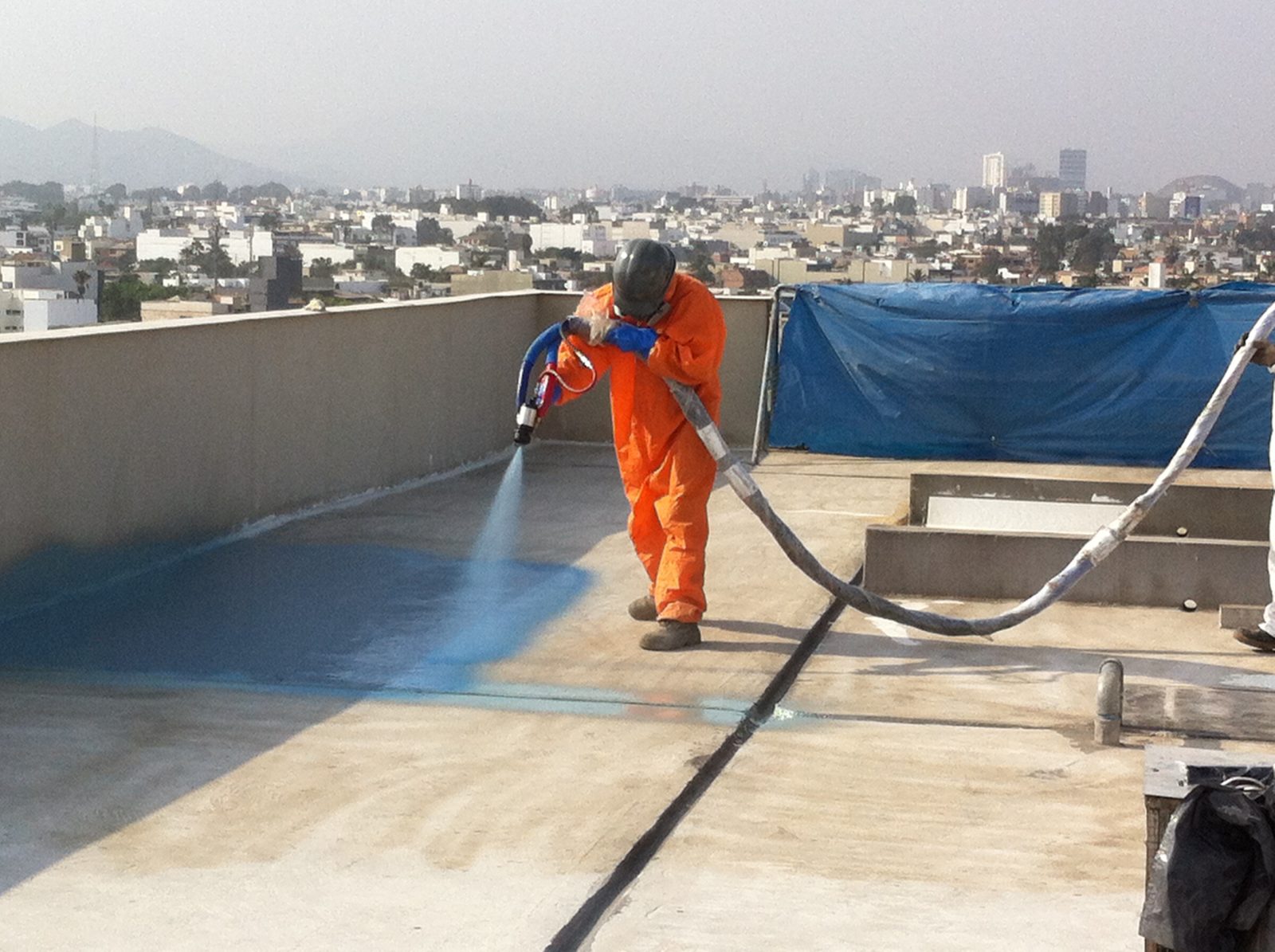
OR-80SLM is a pure polyurea membrane sprayed by plural-component equipment. It costs more per square foot on day one and it is not something you brush on from a pail. What you get instead is a monolithic waterproofing layer with 300–400% elongation, no annual recoat cycle, and Miami-Dade approval behind it. If your old aluminized coating is what is currently failing, 7001 Primer is what lets us go over it without bleed-through.
Metal Roof Work
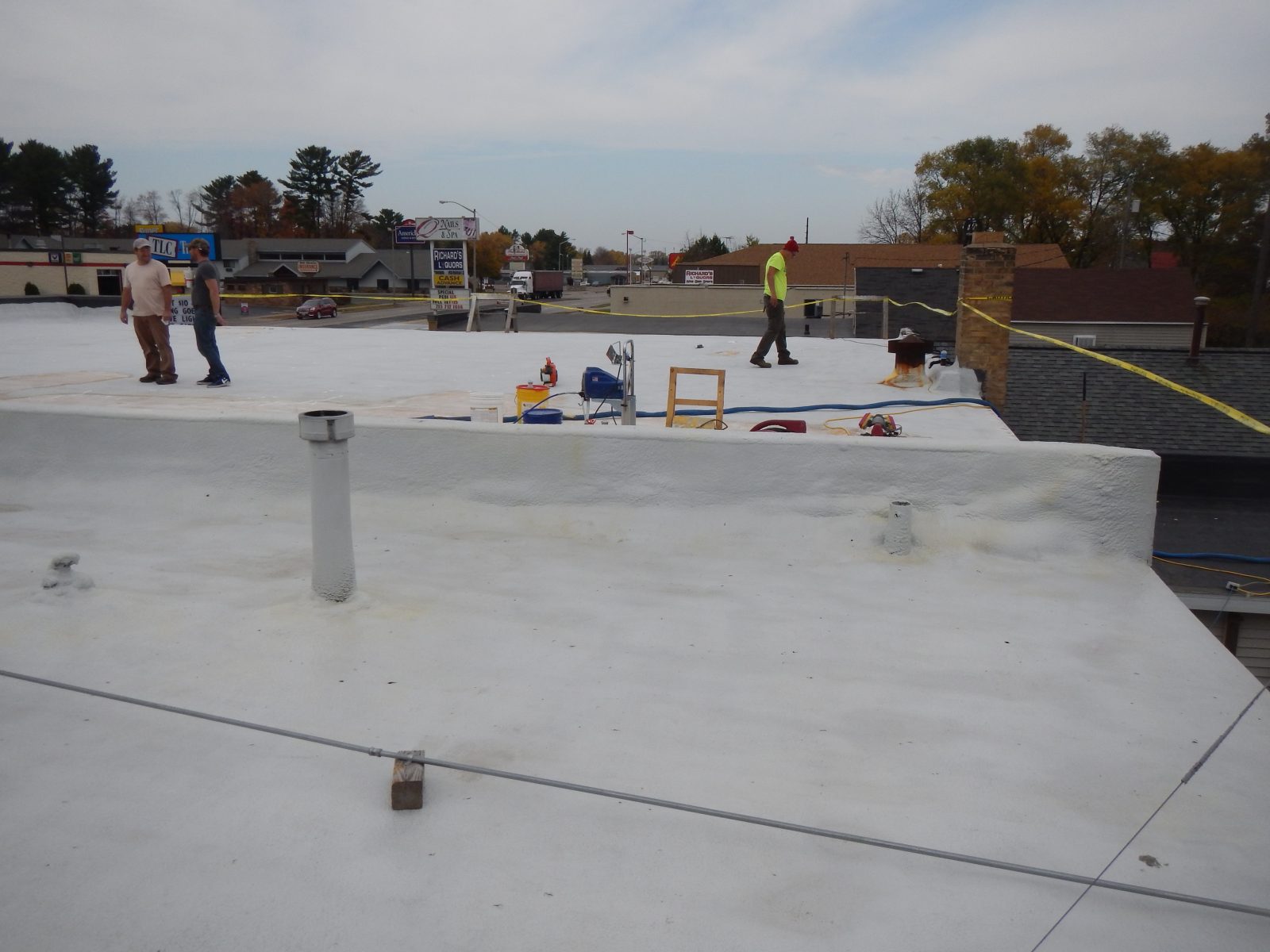
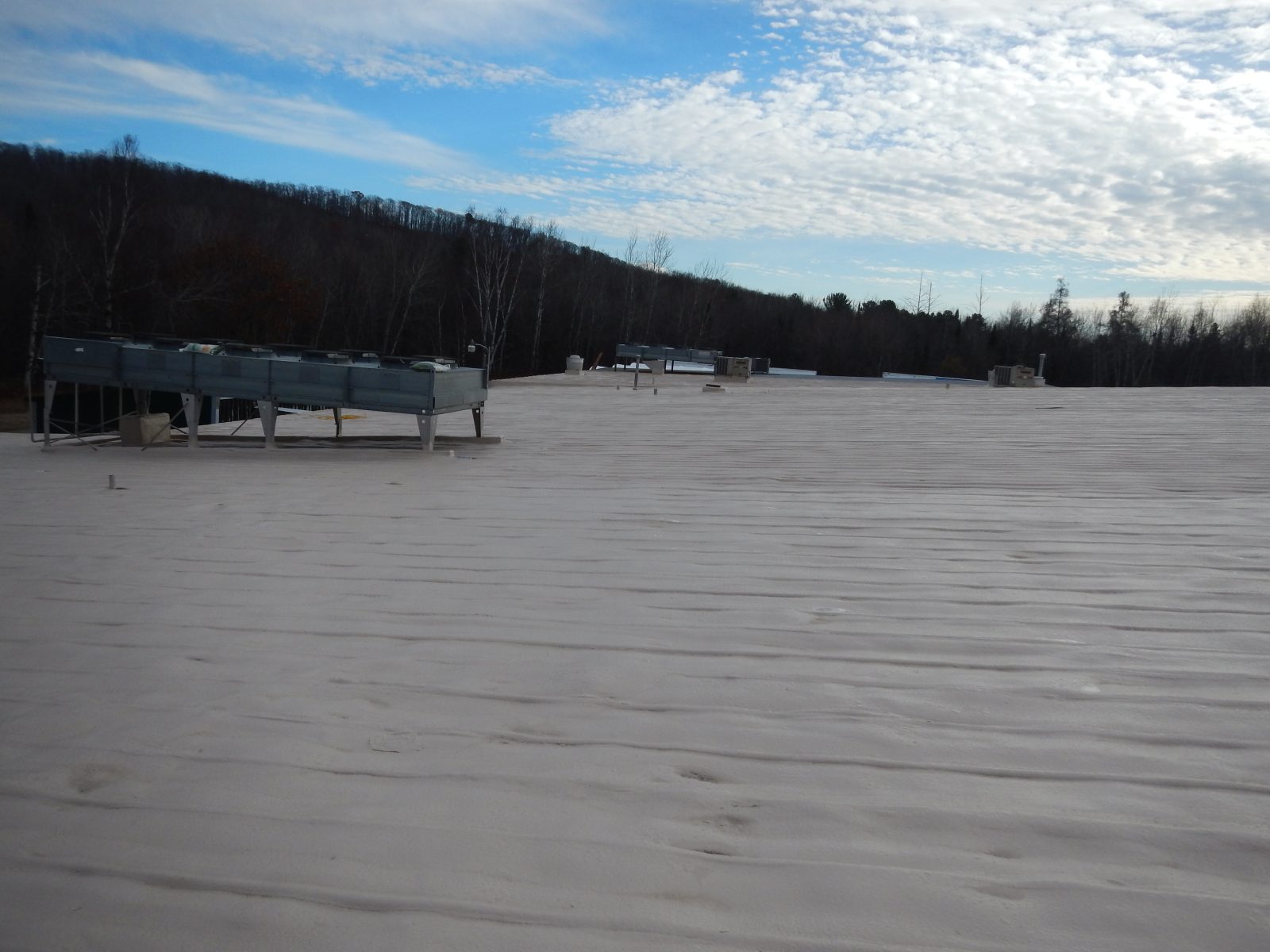
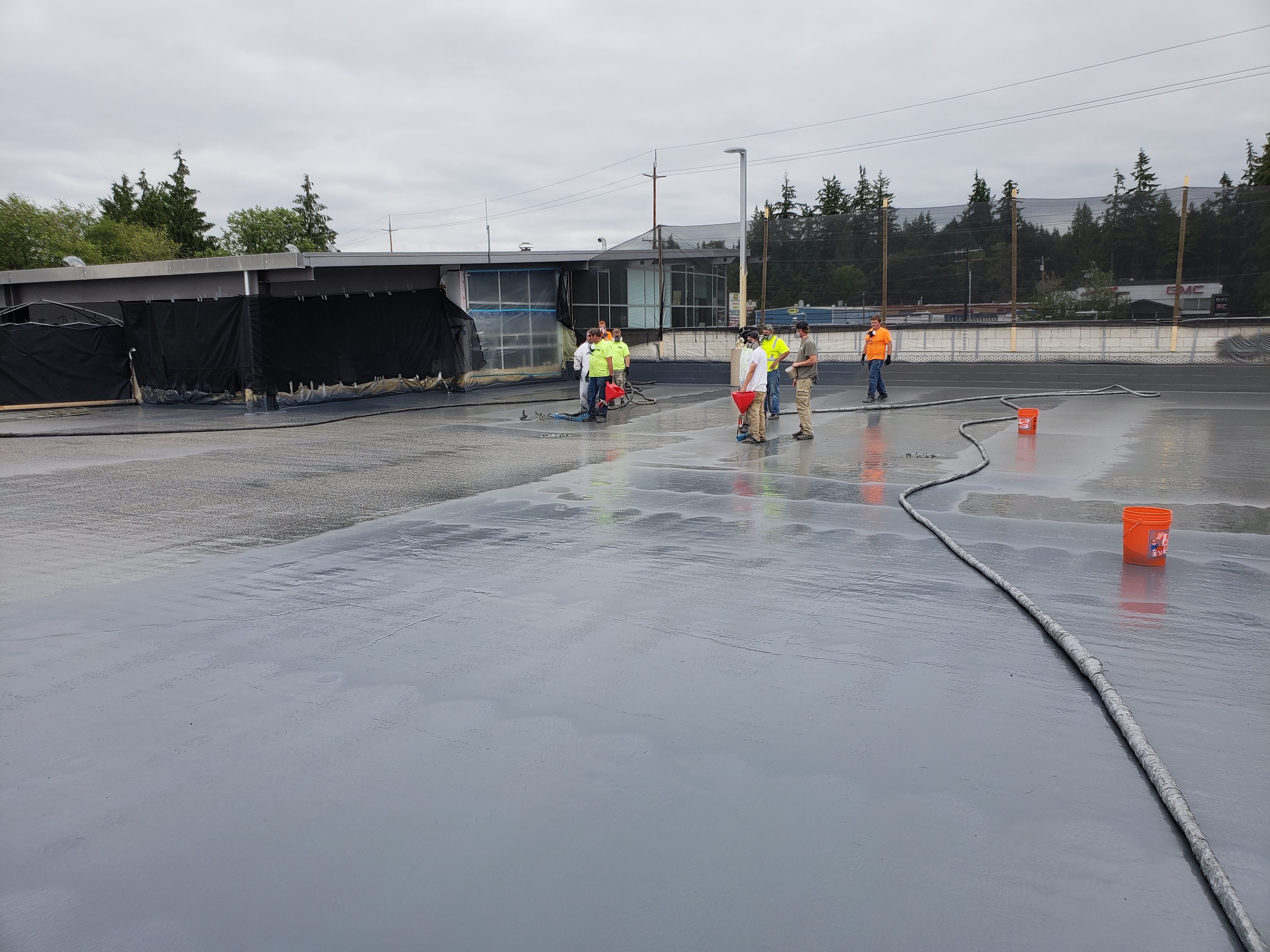
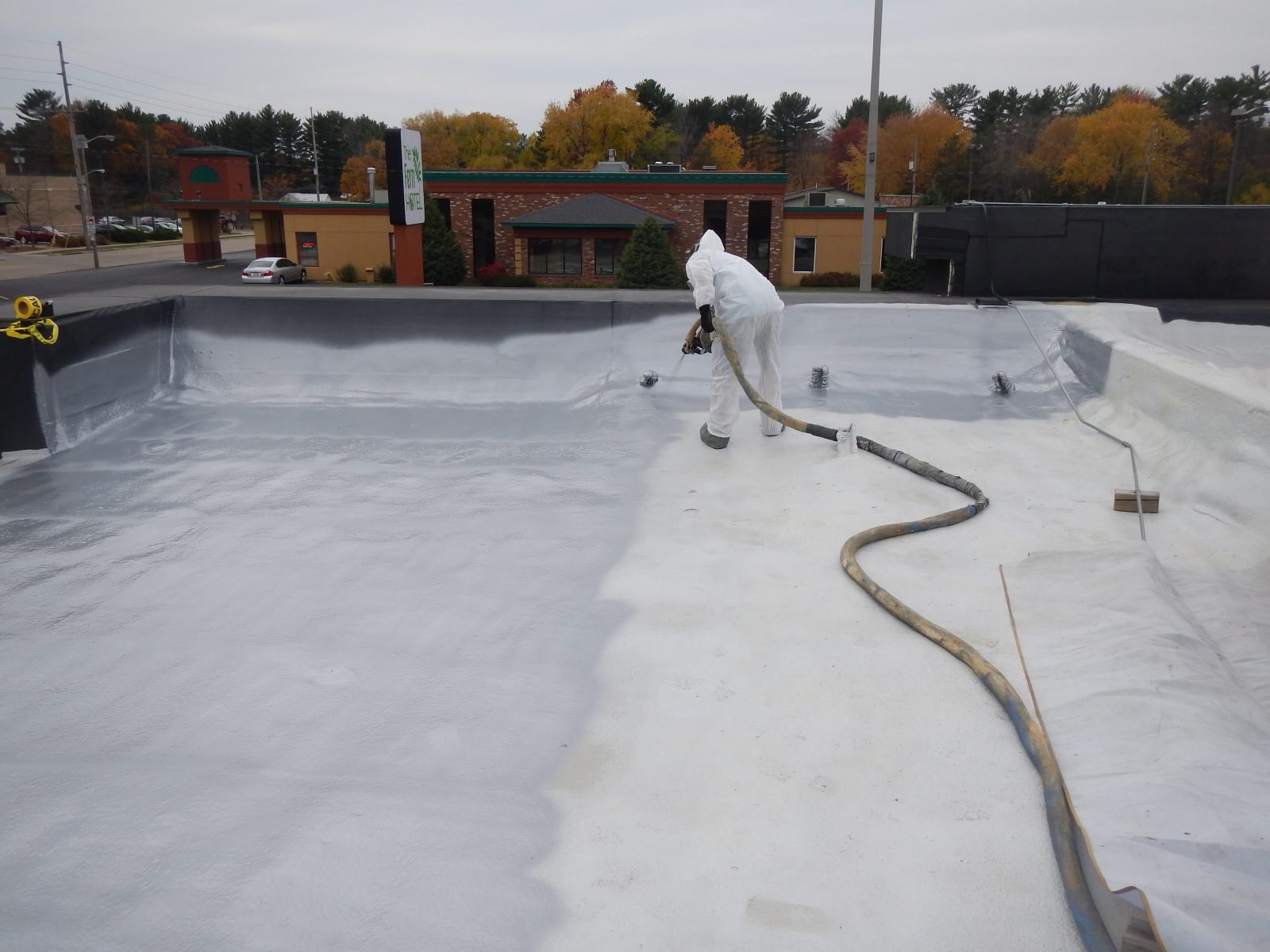
Send Us the Panel Gauge and the Fastener Type
Those two details plus the square footage tell us most of what we need. You will get back a primer recommendation, a DFT target, coverage math, and budget pricing. Contractors and distributors — include your region and we will attach the wholesale schedule.
Request Pricing & SpecsRequest Contractor Pricing & Specs
Tell us about your project and we will follow up with product details, technical data sheets, and pricing.
Frequently Asked Questions
Aluminum Roof Coating Questions
What contractors and building owners actually ask us about aluminum.
Aluminum-Specific Questions
Why does aluminum need a primer when blasted steel does not?
Because aluminum re-oxidizes almost immediately. Blasted steel presents clean metal that polyurea can bond to directly. Cleaned aluminum grows a fresh oxide skin within minutes, and a coating applied to that skin is bonded to the oxide, not to the metal — so it releases in sheets later. 7001 Primer is formulated to key through that thin fresh oxide, and it must go on in the same working session as the abrasion.
Can I just blast the aluminum harder to get a better profile?
No, and this is the most common mistake we see. Aluminum roof panel is typically 0.024" to 0.040" thick. An SSPC-SP6 commercial blast that is perfectly appropriate on structural steel will oil-can the panel, distort the ribs, and can perforate thin sheet. Aluminum wants a degrease followed by a uniform matte from a low-pressure brush-blast or abrasive pad — then primer, promptly.
How does the coating deal with all that thermal movement?
By stretching instead of resisting. OR-80SLM elongates 300–400% with tear strength in the 400–500 pli range. A 100-foot aluminum panel run moving close to an inch across a seasonal swing is a fraction of a percent of strain on the membrane. It is well inside the elastomer's working range, which is why it does not crack at seams and end laps the way rigid films do.
Will a coating actually stop galvanic corrosion at steel fasteners?
Yes, by removing the electrolyte. Galvanic corrosion needs three things: two dissimilar metals in contact, and a conductive liquid bridging them. You cannot separate the screw from the panel after the fact, but you can eliminate the water. A continuous membrane that fully encapsulates the fastener head, the washer, and the surrounding panel breaks the circuit. The key word is continuous — a coating that terminates at the fastener has done nothing.
Existing Coatings & Condition
My roof already has silver aluminized asphalt coating on it. Do I have to strip it?
Usually not all of it. Remove everything loose, blistered, or delaminating — anything a scraper takes off has to go, because the membrane will only be as attached as what is under it. Over the sound remainder, 7001 Primer both bonds and blocks bleed-through so the asphaltic material does not stain or soften the polyurea. Send photos and we will tell you honestly whether it is a prime-over or a strip.
What if the panels are already pitted or perforated?
Scattered pitting with sound metal around it is a coating candidate — polyurea at 60 mil bridges small perforations readily, and a reinforcing fabric detail handles larger ones. Widespread section loss, panels you can push a screwdriver through, or a deck that is structurally soft is a tear-off. We will say so. We would rather lose a job than warranty a membrane over a substrate that is leaving.
Can it go over an existing acrylic or silicone roof coating?
Acrylic, generally yes with 7001 Primer once the loose material is off and the surface is washed and dry. Silicone is the difficult one — it resists adhesion by design and usually needs to come off or be aggressively abraded and tested. Always run an adhesion test patch on an unknown existing coating before committing the roof.
Does it need recoating on a cycle?
No. That is the practical difference from fibered aluminum and acrylic products, which are maintenance coatings on a repeating schedule. OR-80SLM is a membrane. The aromatic chemistry will chalk cosmetically in UV over time without affecting waterproofing or physical properties; where long-term appearance and peak reflectivity matter, we spec a reflective aliphatic topcoat over it.
Cost, Coverage & Logistics
What is the coverage rate and how do I estimate material?
At 100% solids, one gallon yields 1,604 mil-sq-ft. At a 50-mil aluminum roof spec that is about 32 sq ft per gallon before waste. Add 10–15% for overspray, seam stripe passes, and surface irregularity, and add primer separately. Send us the square footage and we will run the takeoff for you.
How does this compare in cost to replacing the aluminum roof?
A coating restoration typically runs a fraction of tear-off and replacement, and it avoids disposal, structural exposure, and the business interruption of an open building. It also usually qualifies as a maintenance expense rather than a capital project, which matters to some owners more than the material cost does. Against another fibered aluminum recoat, polyurea is more up front and less over ten years.
What equipment does it take to spray?
A plural-component proportioner with heated hose — Graco Reactor E-20 or E-30 class or equivalent. This is not roll-on or airless material. If you do not have a rig, we can refer an applicator in your region, or talk to you about adding the capability including machine selection and training.
Can it be sprayed in cool or humid weather?
Yes, within limits, and better than most alternatives. Pure polyurea is not moisture-sensitive during cure and gels in seconds, so ambient humidity has very little opportunity to affect the film. Substrate temperature and dew point still govern — you cannot coat a panel with condensation on it. We will go over the working window for your climate and season.
Still Have a Question About Your Aluminum Roof?
Ask it directly. Someone who has sprayed aluminum panel will answer — not a call center reading from a brochure.
Ask a Question